
Pixel Pioneers STEM classes for ages 9–14
More complex projects with greater independence
Pixel Pioneers gives children aged 9–14 opportunities to develop their coding, robotics, design, electronics and engineering skills through increasingly challenging STEM projects.
Previous coding or robotics experience is not required.
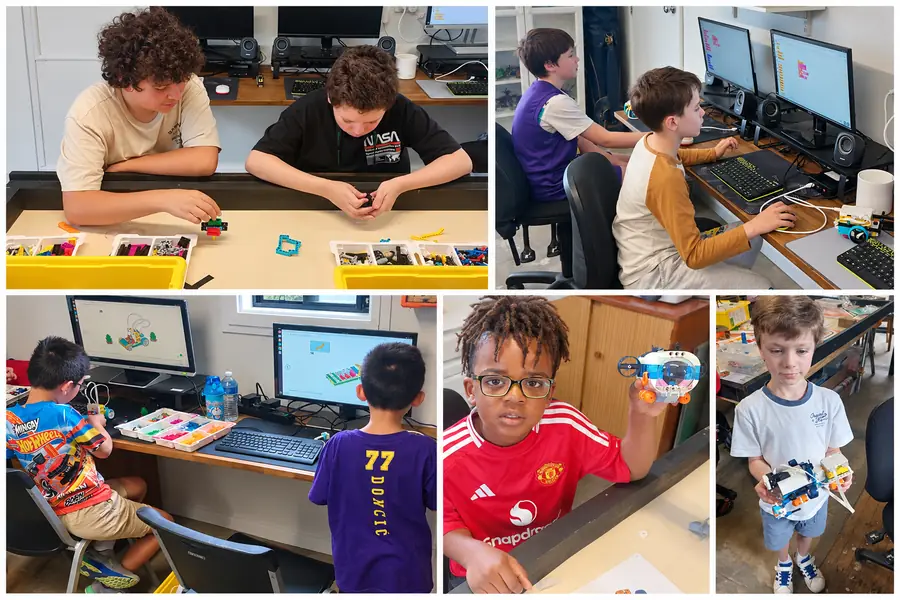
STEM classes for older kids ready to explore further
Pixel Pioneers is designed for children aged 9–14 who are ready to take on more complex STEM activities, while still providing the guidance they need when learning something new.
Projects can involve game development, coding, robotics, CAD and 3D printing, electronics and engineering. Compared with Junior Bots, students increasingly need to plan their approach, evaluate different solutions and make more of their own decisions as they work.
Some children join Pixel Pioneers with existing coding or Digital Technologies experience. Others are relatively new to STEM. Activities provide a core task to work from, with guidance around unfamiliar skills and opportunities for students to adapt, extend and develop their own ideas.
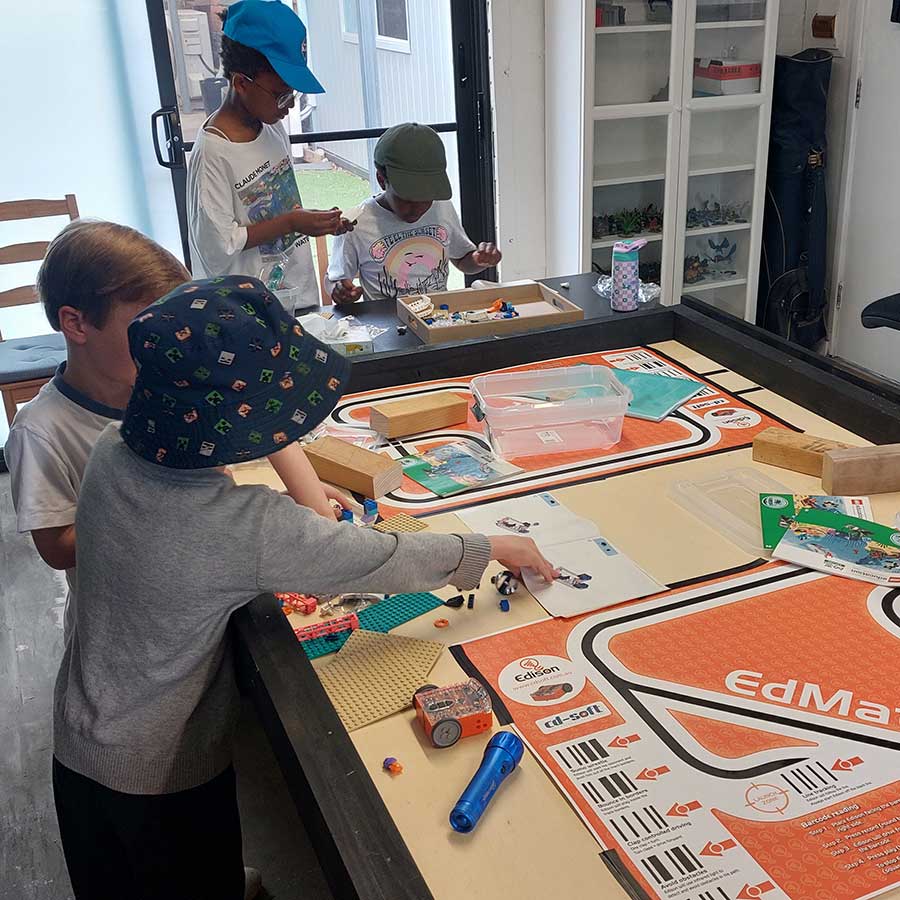
What students explore in Pixel Pioneers
Content changes from term to term, allowing students to encounter new projects while continuing to use and develop skills they have learned previously.

Game development and coding
Pixel Pioneers students work on more complex game ideas, with past projects including clicker games, tower defence games and top-down dungeon crawlers.
These projects can extend across more than one lesson and introduce coding concepts such as functions, loops and variables. For complex or unfamiliar code, I may provide the initial setup before students adapt and apply it themselves.
Students have considerable freedom over design choices within the broad game theme and base mechanics. When someone wants to add a particular feature, we can also investigate how the code might be developed to make that idea work.

Robotics and engineering
Robotics becomes more complex in Pixel Pioneers, both in how robots are built and how they are controlled.
Students can work with LEGO Spike Prime and Edison robots, using multiple motors and sensors to complete more challenging tasks. Projects can introduce gyroscopes for more accurate movement, light sensors for detecting or following lines, and increasingly autonomous robot behaviour.
First LEGO League mission kits can also provide engineering and robotics challenges, giving students choices about which missions to tackle and how they want to solve them.

CAD design and 3D printing
Design projects require more planning as students progress.
Past CAD activities have included rubber band cars, buzzer games, fidget toys and hinged boxes. Students can begin by examining an example and the key design steps, then plan their own solution on paper before working in Tinkercad.
A project such as the rubber band car combines design requirements with considerable freedom over the final solution. Once built, cars can be tested and refined, giving students practical experience of prototyping and improving a design.

Electronics and problem solving
Electronics can become part of a larger project rather than a standalone circuit.
Pixel Pioneers students have worked on projects such as buzzer games and operation-style games, requiring them to combine electronics with design and construction.
As activities become more involved, students need to think about how different parts of a system work together and troubleshoot when the first solution does not work as expected.
What happens in a Pixel Pioneers class?
Each class centres on a planned project, but students have increasing scope to decide how they approach and develop their work.
I introduce the activity, explain the key requirements and provide guidance around unfamiliar techniques or more complex code. Examples and instructions give students a starting point without determining every design decision they make.
As students work, I move around the class to answer questions, check progress and help when they encounter a problem.
The aim is not to remove support as projects become harder. It is to use that support differently. More experienced students can work independently on familiar aspects of a task, while I help them troubleshoot, investigate a new idea or understand a more advanced concept.
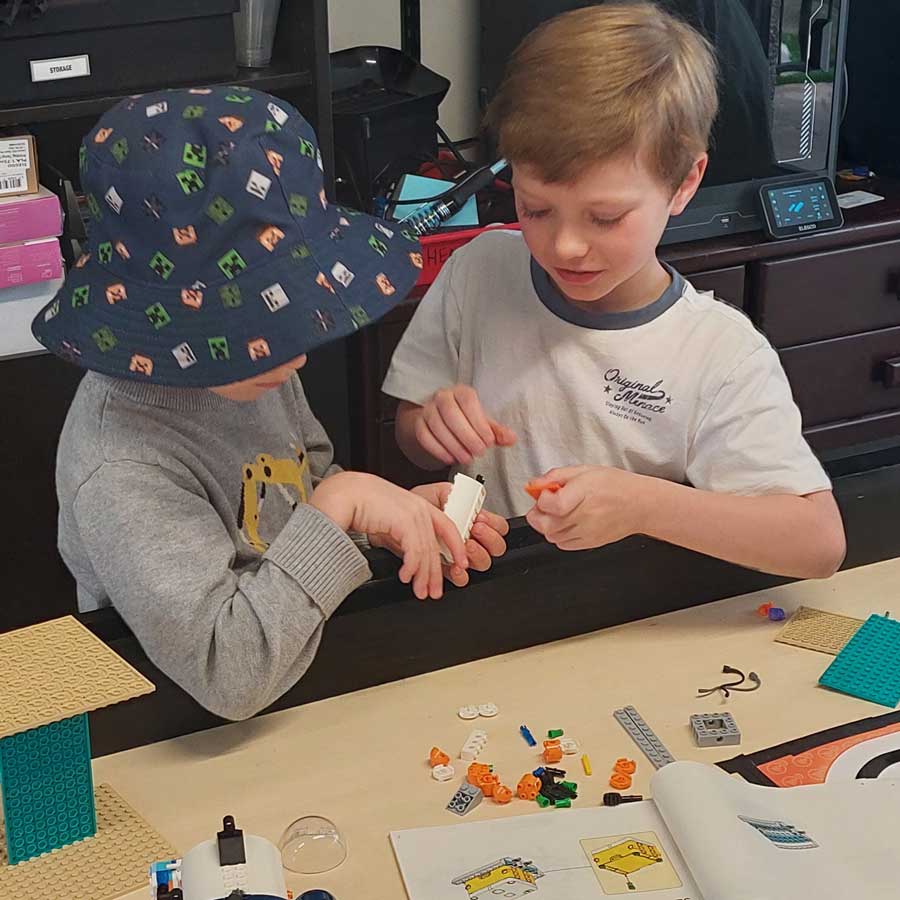
Developing more advanced STEM skills
Pixel Pioneers gives students repeated opportunities to apply existing skills to unfamiliar projects rather than following one fixed sequence.
New content is introduced each term, while important coding, design, robotics and problem-solving skills continue to reappear in different contexts.
More complex coding
Students can progress beyond foundational block coding to work with concepts such as variables, functions and loops. Code becomes larger and more complex, making it increasingly important to break a problem into smaller parts.
More planning and prototyping
Complex design activities require students to spend more time thinking before they start building. Measurements, design choices, testing and refinement become increasingly important.
More capable robotics
LEGO Spike Prime provides greater capacity for combining motors and sensors than the equipment typically used by younger Junior Bots students. Students can therefore build and program more sophisticated behaviour.
Greater independence
As students become familiar with a technology, they can take more responsibility for decisions within the project. Support can then focus on the parts that genuinely challenge them or the ideas they want to investigate further.
Who is Pixel Pioneers suited to?
Pixel Pioneers is designed for children aged 9–14, but students do not need to arrive with the same experience or interests.
Some particularly enjoy coding and want to create more sophisticated games. Others are drawn to robotics, LEGO, engineering, electronics or 3D design. We have children who enjoy working alongside others and students who prefer concentrating on their own project.
Previous coding or robotics experience is not essential.
For children around ages 8–10, choosing between Junior Bots and Pixel Pioneers can depend on more than age. Previous experience, confidence, interests, existing skills and the level of independence a child is comfortable with can all be relevant.
A free Come and Try class can help us identify the most appropriate starting point.
Pixel Pioneers class days and practical information
Pixel Pioneers runs as a term-based STEM program at the Bits and Bots Learning studio in Panorama, Adelaide.
Current Saturday class options are:
Saturday
11:00am–12:30pm
Saturday
1:30–3:00pm
For current term dates, class availability and pricing, please check the booking page.
STEM learning backed by specialist experience
I’m David Hemer, Founder and Owner of Bits and Bots Learning and a registered Highly Accomplished Teacher. I currently teach Mathematics, Digital Technologies and Technologies in South Australian secondary education.
My background includes more than 35 years of specialised experience across Digital Technologies, STEM, computing and education. Before becoming a high school teacher, I worked as a Senior Lecturer and Research Fellow at Adelaide University and the University of Queensland. I have also coached and managed First LEGO League teams.
Frequently asked questions parents ask about Pixel Pioneers
Who is Pixel Pioneers designed for?
Pixel Pioneers is designed for children aged 9–14 who want to explore coding, robotics, engineering, electronics and design through practical STEM projects. Students include those with previous Digital Technologies experience as well as children who are relatively new to these areas.
How do students learn in Pixel Pioneers?
Students work through planned STEM projects with guidance where it is needed and increasing freedom over their decisions. As their skills develop, they can take greater responsibility for planning, coding, designing, problem solving and extending their own ideas.
What activities do students do in Pixel Pioneers?
Activities vary between terms and can include game development, LEGO and Edison robotics, CAD and 3D printing, electronics and engineering projects. Past activities have included tower defence games, First LEGO League missions, rubber band cars, hinged boxes and buzzer games.
Does my child need previous coding or robotics experience?
No. Previous experience is not essential. Students can receive guidance when working with unfamiliar technologies or concepts, while those with more experience have opportunities to extend projects and work with greater independence.
Is Pixel Pioneers an advanced coding class?
Coding is an important part of Pixel Pioneers, but it is not the only focus. Students also experience robotics, engineering, CAD and 3D printing, electronics and design through projects that can combine several STEM skills.
How is Pixel Pioneers different from Junior Bots?
Pixel Pioneers introduces greater complexity and independence for ages 9–14. Students can work with more advanced coding concepts, robotics systems and design challenges, while taking greater responsibility for planning and problem solving. Junior Bots provides a more guided foundation for ages 6–9.
Do Pixel Pioneers projects change each term?
Yes. New content is introduced each term, giving returning students different projects while allowing them to continue applying and developing skills from previous terms.
Can my child try Pixel Pioneers before enrolling?
Yes. A free Come and Try class gives your child an opportunity to experience the activities before enrolling and helps us assess whether Pixel Pioneers is the most suitable group.
Take the next step with Pixel Pioneers
Give your child opportunities to take their coding, robotics, design, electronics and engineering skills further through hands-on STEM projects at our Panorama studio. Start with a free Come and Try class or check current Pixel Pioneers term availability.