
STEM Classes Adelaide
Hands-on STEM learning through creating and exploring
Hands-on STEM classes for ages 6–14, combining coding, robotics, 3D design, electronics and engineering through practical projects.
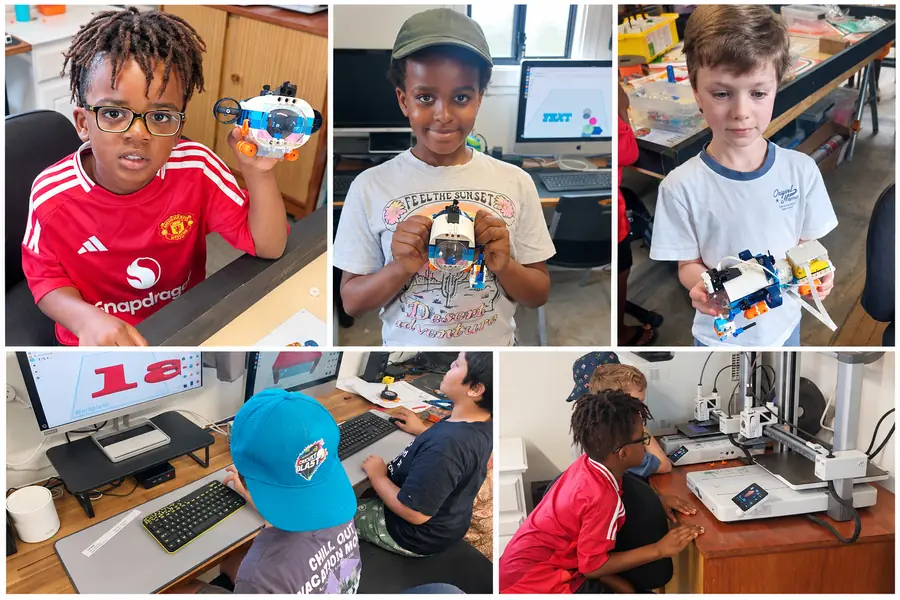
Hands-on STEM classes for kids in Adelaide
STEM classes give children practical opportunities to explore science, technology, engineering and mathematics through creating, building, coding and problem solving.
Bits and Bots Learning runs term-based STEM classes for children aged 6–14 at our Panorama studio in Adelaide. Children explore a broad mix of technologies rather than concentrating on coding alone, with activities spanning robotics, electronics, 3D CAD design, 3D printing and engineering.
Our aim is to combine an enjoyable extracurricular activity with genuine learning, giving children opportunities to develop technical, creative, planning, communication and problem-solving skills.
Learning STEM by building, coding and creating
I sometimes describe the Bits and Bots approach as “learning by stealth.” Children are concentrating on creating something they can see, test or use, while learning the technology and thinking behind it.
One project might involve developing a game. Another could mean programming a robot, designing an object in CAD, building an electronics circuit or solving an engineering challenge.
Depending on the program and term, children can:
- Write and develop code
- Build and program robots
- Create games and digital projects
- Design objects using 3D CAD
- Turn digital designs into 3D printed objects
- Build and explore electronic circuits
- Plan and test engineering solutions
- Evaluate and improve their work
- Work independently and collaboratively
- Experiment with their own ideas
This variety gives children opportunities to experience different areas of STEM and discover the technologies and types of projects that particularly interest them.
Two STEM programs for children aged 6–14
Our STEM classes are divided into two term programs, with the level of guidance, project complexity and independence developing as children gain experience.

Junior Bots | Ages 6–9
Junior Bots provides younger children with a guided introduction to coding, robotics, electronics and 3D design through practical projects.
Children learn foundational skills while receiving clear instructions and individual support, with opportunities to experiment as their confidence and experience develop.

Pixel Pioneers | Ages 9–14
Pixel Pioneers takes STEM learning further through more complex coding, robotics, electronics, design and engineering projects.
Students work with increasing independence, taking greater responsibility for planning, problem solving and the decisions they make within their projects.
Which STEM class is right for your child?
Age is a useful starting point when choosing between Junior Bots and Pixel Pioneers, but it is not the only consideration.
For children around ages 8–10, the most suitable class can also depend on previous coding or robotics experience, confidence, interests, independence and existing skill level.
If you are unsure, I generally recommend starting with a free Come and Try class. This gives your child an opportunity to experience the activities and gives me an opportunity to see how they approach them.
If the choice is still unclear, I generally recommend starting with Junior Bots. We can then assess whether your child is ready to progress to Pixel Pioneers in a following
STEM classes for different interests and experience levels
Children come to Bits and Bots with a wide range of interests and previous experience.
Some love building, particularly with LEGO. Others enjoy creating games, designing objects in 3D, coding or working with robots. We have complete beginners as well as children who have already discovered an interest in Digital Technologies and want opportunities to explore further.
Students can work individually or in pairs depending on the activity. Small class sizes make it easier for us to support different levels of experience and give children opportunities to take an activity further once they have completed the core task.
This means children do not all need to start with the same knowledge or be interested in exactly the same part of STEM.
Explore different areas of STEM learning
Junior Bots and Pixel Pioneers expose children to different technologies and ways of solving problems. Activities change from term to term, giving students opportunities to experience several areas of STEM rather than concentrating on one technology.
Coding
Coding is used across game development, robotics and other digital projects. Younger children can begin with graphical block-based environments, with opportunities to encounter increasingly complex coding as their skills develop.
Robotics
Children use systems including Edison robots, LEGO Spike Essential and LEGO Spike Prime. Activities combine coding, building and engineering, with projects becoming more complex as students gain experience.
3D design and printing
Children use CAD to turn ideas into digital designs and then see some of those designs produced on a 3D printer.
Projects have included name tags, coins, fidget toys, containers, hinged boxes and rubber band cars. As activities become more complex, children can spend more time planning, measuring, prototyping, testing and refining their designs.
Seeing their own CAD work produced on a 3D printer also gives students immediate feedback on the design decisions they have made.
Electronics and engineering
Electronics and engineering activities give children opportunities to build, test and understand how different components and systems work together.
Projects can involve circuits, LEDs, resistors, Micro, Snap Circuits and other equipment. As activities become more advanced, children may combine design, building, electronics and coding within the same project.
STEM learning develops over multiple terms
Children do not need to complete one fixed sequence of projects. Content is new each term, while important underlying skills are revisited and developed through different activities. This repeated exposure is an important part of how we approach STEM learning.
Build familiarity
Newer students receive more guidance as they learn to use coding environments, robotics equipment, CAD software, electronics and other technologies.
Take on greater complexity
As skills develop, projects can introduce more advanced coding concepts, robotics systems, design requirements and engineering problems.
Apply skills to new projects
Students encounter familiar concepts in different contexts. Instead of learning a coding, robotics or design skill once, they have opportunities to use it again in a new activity.
Work with increasing independence
More experienced students generally need less direct support with familiar tasks. I can then focus more on helping them troubleshoot difficult problems, extend an idea or investigate something they want to create.
Projects provide entry points for newer students and extension opportunities for those with more experience. Some children have continued attending Bits and Bots Learning for more than eight terms.
STEM learning that extends beyond the classroom
Bits and Bots STEM programs are designed as enjoyable extracurricular learning while expanding on areas children encounter through Digital Technologies at school.
There is a strong embedding of Processes and Production Skills from the Australian Curriculum for Digital Technologies across Years 2–8, including:
- Generating and Designing
- Producing and Implementing
- Evaluating
- Collaborating and Managing
Children also gain frequent exposure to Digital Systems and Data Representations.
The difference is in the opportunity to apply these areas through practical projects. Children can spend time designing, building, coding, testing and improving their own work while gaining hands-on experience with a broad range of technologies.
What happens in a STEM class?
Each class has a planned main activity based around a particular technology, platform or skill.
I begin by explaining what we are going to do and showing students an example of the finished project, such as a game, 3D printed object or electronics circuit. Instructions include plenty of screenshots to help students work through the activity.
During the class, I move between students to answer questions, check understanding and review their work at important stages.
The core activity provides structure, but completing it does not necessarily mean the learning stops. Depending on the project and the student's experience, there can then be opportunities for extension or independent experimentation.
Common questions parents ask about our STEM classes
Who are Bits and Bots Learning STEM classes designed for?
Bits and Bots Learning STEM classes in Adelaide are for children aged 6–14 with a broad range of interests and experience. Some already enjoy coding, robotics, LEGO, games or design, while others are complete beginners. Junior Bots is for ages 6–9 and Pixel Pioneers for ages 9–14.
How do children learn STEM at Bits and Bots Learning?
Children learn through hands-on projects at our Panorama studio in Adelaide. We combine planned activities with individual support and opportunities to experiment, using coding, robotics, 3D design, electronics and engineering to give children repeated opportunities to create, test ideas and solve problems.
What STEM activities do children experience at Bits and Bots Learning?
Bits and Bots Learning uses a broad range of STEM activities rather than concentrating on one technology. Depending on the program and term, Adelaide students can experience game development, coding, Edison and LEGO robotics, Micro, electronics, 3D CAD, 3D printing and engineering challenges.
STEM classes at our Panorama studio
Our STEM classes are held at the Bits and Bots Learning studio in Panorama, South Australia.
Around half of our students come from neighbouring suburbs in the Mitcham council area, while other families travel from across metropolitan Adelaide, including Burnside, Brighton, Lightsview, Hallett Cove and Glenside.
The studio has eight individual computer workstations, giving each student access to a computer when required. Students also have access to equipment including:
- Three 3D printers
- 15 Edison robots
- 15 Micro-bit controllers
- LEGO Spike Prime and Spike Essential kits
- Arduino kits with sensors and actuators
- Snap Circuits kits
- Retro Arcade devices
Depending on the activity, children can work individually or in pairs with the technology involved in their project.
Frequently asked questions about STEM classes
What are STEM classes for kids?
STEM classes give children opportunities to explore science, technology, engineering and mathematics through practical activities. At Bits and Bots Learning, this includes coding, robotics, electronics, CAD, 3D printing and engineering. Children can use several different skills while designing, building, creating, testing and solving problems.
Does my child need previous coding or robotics experience?
No. Children can join Bits and Bots Learning with little or no previous coding, robotics or STEM experience. We also have students who already have experience and want to develop their skills further. Projects provide starting points for newer students and opportunities for more experienced children to extend an activity.
What is the difference between Junior Bots and Pixel Pioneers?
Junior Bots is designed for ages 6–9 and provides more guidance while children develop foundational skills. Pixel Pioneers is for ages 9–14 and introduces greater project complexity and independence. For children around the overlapping ages, previous experience, confidence, interests and independence can also help determine the most appropriate group.
Do the STEM projects change each term?
Yes. Content is new each term and builds on skills children have developed previously. Students can continue attending without simply repeating the same projects. Activities provide accessible starting points for newer students and extension opportunities for children who already have experience with the technology.
Do your STEM classes align with the Australian Curriculum?
Junior Bots and Pixel Pioneers incorporate Processes and Production Skills from the Australian Curriculum for Digital Technologies across Years 2–8. These include generating and designing, producing and implementing, evaluating, collaborating and managing. Students also encounter Digital Systems and Data Representations through practical projects.
Can my child try a STEM class before we enrol?
Yes. Free Come and Try sessions are available for children considering Junior Bots or Pixel Pioneers. Children typically experience two taster activities, such as 3D CAD and printing followed by coding with an Edison robot or Micro. We can then help you identify the most suitable term class.
Are you looking for secondary school tuition?
Bits and Bots Learning also provides Maths and Digital Technologies tuition for students in Years 8–12. These are separate from our STEM term programs for ages 6–14.
Try hands-on STEM classes in Adelaide
Give your child the opportunity to explore coding, robotics, 3D design, electronics and engineering through practical STEM projects at our Panorama studio.
Start with a free Come and Try class, explore Junior Bots or Pixel Pioneers, or view current term class availability.